Dr. Brian Logan 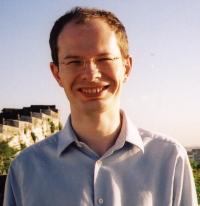
Associate Professor
School of Computer Science
University of Nottingham
Nottingham, NG8 1BB UK
Phone: +44-115-846-6509
Fax: +44-115-951-4254
Email: bsl@cs.nott.ac.uk
Office: C34
| Research |
Publications |
Teaching |
RESEARCH
My research interests lie in the area of agent systems, and spans the specification, design and implementation of agents, including agent architectures, agent programming languages and logics and theories for agent-based systems. I am also interested in applications of agents, particularly in virtual environments and in simulation.I am a member of the Agents Lab and the Mixed Reality Laboratory.
Current projects
- Verification of Resource-Bounded Multi-Agent Systems (VRBMAS). Agents need resources to act: actions may require energy, time to complete, and other resources depending on the application domain, for example, money. A multi-agent system will have very different behaviours depending on the resource endowment of the agents that comprise it. The aim of this project is to develop tools and techniques for verification of multi-agent systems that explicitly take into account the agents' resource limitations and requirements. This is a collaborative project with Dr Franco Raimondi at the University of Middlesex. The project is funded by the EPSRC as project number EP/E031226.
- Evolvable Assembly Systems - Towards Open, Adaptable and Context-Aware Equipment and Systems (EAS). Assembly of final products in sectors such as automotive, aerospace, pharmaceutical and medical industries is a key production process in high labour cost areas such as the UK. To respond to the current challenges manufacturers need to transform current capital-intensive assembly lines into smart systems that can react to external and internal changes and can self-heal, self-adapt and reconfigure. Consequently, there is a need for a radically new approach towards development of future assembly systems able to continuously evolve to respond to changes in product requirements and demand with extremely short set-up times combined with low cost of maintenance, system reconfiguration and capability upgrade with emerging new technologies. As the level and type of automation changes, future assembly systems will also require a different type of engagement of human operators in hybrid decision-making, monitoring and system adaptation. The aim of the EAS project is to is to define and validate the vision and support architecture, theoretical models, methods and algorithms for Evolvable Assembly Systems as a new platform for open, adaptable, context-aware and cost effective production. EAS is a 2.15m project involving the Division of Manufacturing and the School of Computer Science funded by the EPSRC as project number EP/K018205/1.
- Cloud Manufacturing - Towards Resilient and Scalable High Value Manufacturing. The Cloud Manufacturing project investigates how digital technologies can enable ‘on demand’ cloud manufacturing. This means replacing high capital expenditures with pay-as-you-go manufacturing services and through-life support, which radically transforms the economics of new product information, volume manufacturing and lifecycle management. Cloud Manufacturing is a 2.36m project involving the Division of Manufacturing and the School of Computer Science funded by the EPSRC as project number EP/K014161/1.
Information about previous projects can be found here, and a list of publications here.
PhD students
- Sam Leask Concurrency and parallelism in agent architectures
- Yuan Yao Tractable deliberation in agent programming languages
- Daniela Dybalova Autonomy and context in human-agent collectives
Previous PhD students
- Elizabeth Gordon Real-time Agent Architectures for Believable Worlds (graduated 2005)
- Mike Lees Adaptive Optmistic Simulation of Agent Based Systems (graduated 2006)
- Dan Fielding Agents Reporting from Collaborative Virtual Environments (co-supervised with Steve Benford, graduated 2007)
- Mark Jago Logics for Resource Bounded Agents (co-supervised with Natasha Alechina, graduated 2006)
- Neil Madden Multi-agent reporting on events in persistent virtual environments (graduated 2009)
- Nguyen Hoang Nga Verifying requirements for resource-bounded reasoners (first supervisor Natasha Alechina, graduated 2011)
- Abdur Rakib Verifying requirements for resource-bounded reasoners (graduated 2011)
- Konstantin Vikhorev Real-time guarantees in high-level agent programming languages (graduated 2011)
- Trang Doan Thu Procedural reflection in agent prgramming languages (graduated 2014)
- Julian Zappala Agent-based models of group decsion making (graduated 2014)
- Hai Nguyen Belief revision for ontologies (first supervisor Natasha Alechina, graduated 2014)
- Liu Xiaofan Analysis and verification of business rules (first supervisor Natasha Alechina, graduated 2015)
I am always happy to consider PhD applications from suitably qualified candidates.
TEACHING
In this session I am teaching G52ACE Algorithms Correctness and Efficiency (with Andrew Parkes) and G53DIA Designing Intelligent Agents. For more information, see the G52ACE and G53DIA moodle pages.
Dissertation Projects (G53IDA, G53IDE, G53IDJ, G53IDR, G53IDS, G53IDY)
I am mostly interested in Artificial Intelligence problems, and I am happy to supervise projects in (almost) any area of AI. I have produced some suggestions for projects as a starting point, but I am happy to discuss other topics if there is an AI or general CS project you would like to do.
MSc Dissertation Projects (G64PIT, G64PMI, G54PRO, HG4SCD)
Some suggested topics suitable for MSc projects can be found here. However if you have your own idea for a topic, I'd be happy to discuss it.
Other Teaching
In previous sessions I have taught:
- G52PSA Planning, Search and Artificial Intelligence Programming
- G52CON Concepts of Concurrency
- G52CCN Computer Communications and Networks
- G52APT AI Programming Techniques
- G52HPA History and Philosophy of Artificial Intelligence
- G54DIA Designing Intelligent Agents
- G64FAI Foundations of Artificial Intelligence
I have also given courses at various summer schools, mostly in the area of logic and agents, e.g.:
- Verification of Autonomous Agents and Multiagent Systems, at the European Agent Systems Summer School (EASSS 2016) in Catania, July 25-29 2016
- Multi-Agent Programming, at the Midlands Graduate School in the Foundations of Computing Science (MGS 2013) in Leicester, April 8-12 2013
- Logics and Multi-Agent Programming Languages, a tutorial at the Eleventh International Conference on Autonomous Agents and Multiagent Systems (AAMAS 2012) in Valencia, June 4-8 2012
- Logics and Agent Programming Languages at the 23rd European Summer School in Logic, Language and Information (ESSLLI 2011) in Ljubljana, August 8-12 2011
- Logics and Agent Programming Languages at the 21st European Summer School in Logic, Language and Information (ESSLLI 2009) in Bordeaux, July 27-31 2009
- Designing Intelligent Agents at the European Agent Systems Summer School, in Turin, 31 August - 4 September 2009
Brief Biography
Prior to coming to Nottingham, I was a lecturer in Artificial Intelligence in the School of Computer Science at the University of Birmingham. I have also worked at the Martin Centre for Architectural and Urban Studies on architectural CAD systems, the Computer Laboratory at the University of Cambridge on computational models of belief revision and the Department of Artificial Intelligence at the University of Edinburgh on design support systems.
From 1999 to 2008 I was an Honorary Research Fellow in the School of Computer Science at the University of Birmingham.
This file is maintained by Brian Logan