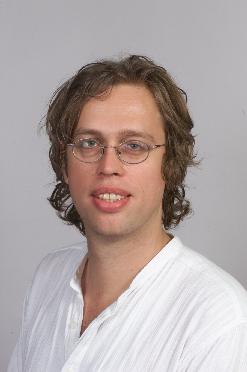
 Thorsten Altenkirch
I am Professor at the School of Computer
Science of the University of
Nottingham. Jointly with Graham Hutton I am chairing the Functional
Programming Laboratory. We are organizing the weekly FP
lunch and the FP seminar.
Current Research grants
- Certified Programming with Dependent Types USAF, Airforce office for scientific research, award FA9550-16-1-0029
- Homotopy Type Theory: Programming and Verification (joint with Leeds and Strathclyde).
(EPSRC grant EP/M016951/1)
Previous Research grants
PhD students
Former Students
Current Students
Current Teaching
I am currently teaching the following modules:
- G52IFR
- Introduction to Formal Reasoning
- G54PRG
- Programming
Previous Teaching
G52MAL
Machines and their languages
G53NSC, G54NSC
Non Standard Computation (2009 presented by Alex Green)
G52MC2
Mathematics for Computer Scientists 2
G53CFR, G54CFR
Computer Aided Formal Reasoning
G53POP
Principles of Programming Languages
- G51CSA
- Computer Systems Architecture
- G51MCS
- Mathematics for Computer Scientists
- G51MAL
- Machines and their languages
- G53GEM (with Natasha Alecina)
- Gems of theoretical Computer Science
- October/November 2000
- A Taste of
Intuitionistic Type Theory
- February/March 2002
- A Taste of Proof Theory
- March 2003
- Intuitionistic Logic
- March/April 2004
- Lambda calculus and types
- April 2007
- Material for Dependently Typed Programming (DEP)
- April 2008
- Material for the COQ course
- March/April 2009
- Material for the Category Theory course
-
Misc
Last modified: Mon Aug 21 11:09:52 BST 2017